Iron Sharpens Iron
Lessons from a Day with Lt. Col. Dave GrossmanThat verse has lived in my mind for a long time. Ever since I first read Lt. Col. Dave Grossman’s books and listened to him speak, I wanted to attend one of his events in person. I had one scheduled in 2020. Then COVID hit. It wasn’t until I finally sat in a room full of law enforcement officers, first responders, military personnel, and everyday citizens who had all made the same deliberate choice to be ready that I understood the verse fully. Iron doesn’t sharpen itself. It requires friction, resistance, and the right company. That day in Arizona reminded me that the people you surround yourself with either sharpen you or they don’t. Choose accordingly.“As iron sharpens iron, so one man sharpens another.” — Proverbs 27:17
On October 1, 2017, my wife Julie and I were standing in a crowd of people at the Route 91 Harvest Festival when the shooting started. In the seconds that followed, everything I thought I knew about crisis response met reality. Julie was shot in the back. The training I had built as an EMT in my early 20’s, years of it, became the only thing standing between chaos and action. I didn’t rise to the occasion that night. I fell back on what I had already built into my bones long before the music stopped. The bullet struck Julie’s left shoulder blade and traveled until it stopped two millimeters from her spinal cord. Two neurosurgeons eventually removed it. In the weeks that followed came the doctor’s visits, the surgery, the Orange County Sheriff’s Debriefing, and the trauma therapist who began helping us process what we had survived. For me, processing looked different than I expected. I didn’t just want to heal. I wanted to understand. I wanted to know the man who had shot at us. Not to forgive him, not to forget him, but to study him. I wanted to get inside his mindset so thoroughly that I would never be caught off guard again.
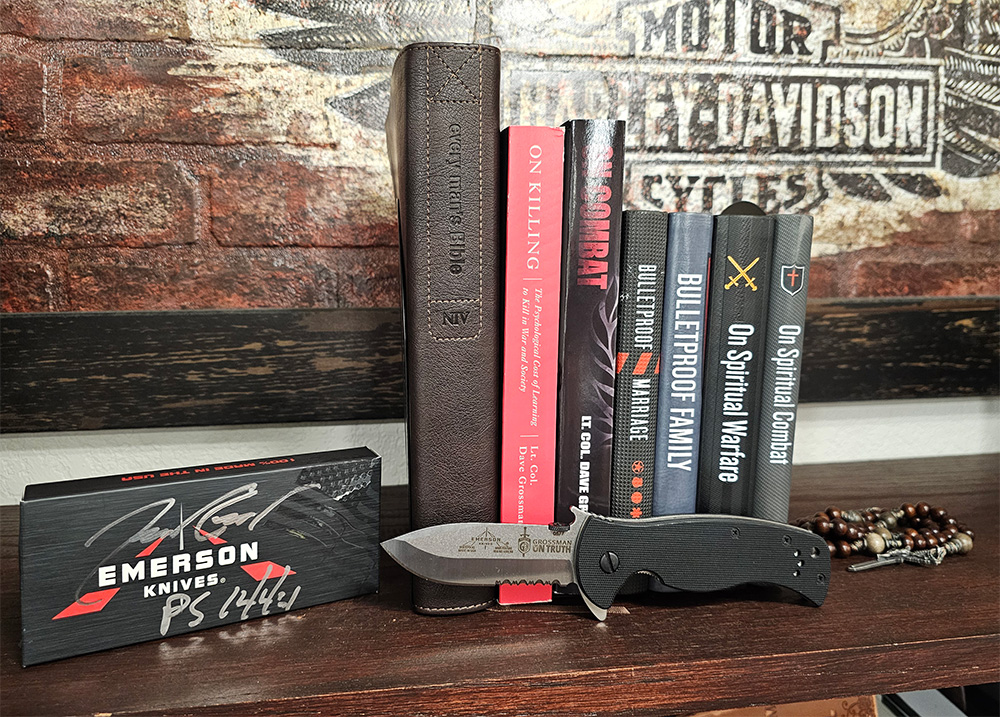 The answers I was looking for lived in Grossman’s work. On Killing examined the psychological cost of taking a life and why most human beings are hardwired to resist it. On Combat went further, mapping what violence does to the human body and mind under extreme stress: tunnel vision, auditory exclusion, time distortion, memory gaps, and the way training takes over when conscious thought can’t keep pace. Reading those pages, I found myself revisiting Route 91 with new understanding. Many of the reactions I experienced that night were not signs of weakness or failure. They were predictable human responses to extraordinary circumstances.
But it was his lesser-known works that revealed the full dimension of the man. On Spiritual Combat and Prayers & Promises for First Responders makes plain what runs beneath everything else Grossman teaches: a deep, sincere Christian faith that frames the sheepdog not just as a protector, but as a servant called to something larger than himself. For Grossman, the willingness to stand between the wolf and the flock isn’t just tactical doctrine. It’s a spiritual calling. That alignment between his faith and mine is part of why his work didn’t just inform me. It anchored me.
Fifty-eight people lost their lives that night. Families lost mothers, fathers, sons, daughters, husbands, and wives. Many survivors carried home injuries that would quietly alter everything that followed. A friend of ours has endured nearly eighteen reconstructive surgeries to her face. She is still in pain.
Some people look at an event like Route 91 and draw a certain kind of comfort from its rarity, the idea that if you survive something like that once, the odds have somehow been paid, and violence won’t find you again.
The answers I was looking for lived in Grossman’s work. On Killing examined the psychological cost of taking a life and why most human beings are hardwired to resist it. On Combat went further, mapping what violence does to the human body and mind under extreme stress: tunnel vision, auditory exclusion, time distortion, memory gaps, and the way training takes over when conscious thought can’t keep pace. Reading those pages, I found myself revisiting Route 91 with new understanding. Many of the reactions I experienced that night were not signs of weakness or failure. They were predictable human responses to extraordinary circumstances.
But it was his lesser-known works that revealed the full dimension of the man. On Spiritual Combat and Prayers & Promises for First Responders makes plain what runs beneath everything else Grossman teaches: a deep, sincere Christian faith that frames the sheepdog not just as a protector, but as a servant called to something larger than himself. For Grossman, the willingness to stand between the wolf and the flock isn’t just tactical doctrine. It’s a spiritual calling. That alignment between his faith and mine is part of why his work didn’t just inform me. It anchored me.
Fifty-eight people lost their lives that night. Families lost mothers, fathers, sons, daughters, husbands, and wives. Many survivors carried home injuries that would quietly alter everything that followed. A friend of ours has endured nearly eighteen reconstructive surgeries to her face. She is still in pain.
Some people look at an event like Route 91 and draw a certain kind of comfort from its rarity, the idea that if you survive something like that once, the odds have somehow been paid, and violence won’t find you again.
Reality doesn’t honor that reasoning.One Route 91 survivor, Telemachus “Tel” Orfanos, made it out of Las Vegas on October 1, 2017, only to lose his life thirteen months later during the mass murders at the Borderline Bar & Grill in Thousand Oaks. Other Route 91 survivors were present at the 2019 Gilroy Garlic Festival mass killing. For some, the nightmare they thought they had escaped found them again. Violence is not a debt that gets settled. It is a condition of the world we live in, one that has existed throughout human history and shows no interest in our preference that it stop. I return to Las Vegas in my writing not to dwell on it, and not to frighten anyone. I return because Route 91 is where I learned, in the most irreversible way possible, that preparedness is not about living in fear. It is about refusing to be surprised by reality and choosing, in advance, to be ready.
Preparedness is not fear. Preparedness is responsibility.That night, as I sat in the lobby of the emergency room, not knowing if Julie was alive or dead, an answer I wouldn’t have until late the next morning, something shifted in me that never fully shifted back. That lobby, that silence, that not knowing; that’s where Not Today was born. Not in a business plan or a classroom, but in a plastic chair at 2 am, unwilling to ever feel that unprepared again.
What follows are the lessons that stayed with me from my day with Lt. Col. Dave Grossman.
The Sheepdog Doesn’t Bow His Head
Grossman opened the seminar before the opening prayer, which is itself a statement worth sitting with. “While the flock has their heads bowed in prayer, the sheepdog has his head up, eyes open, head on a swivel, looking for threats to the flock.” “Does the Secret Service bow their heads when the President prays? No. I am my family’s Secret Service.”Vigilance isn’t paranoia. It’s the price of the role you’ve accepted.
The World Doesn’t Care Whether You’ve Acknowledged It
Beslan, Russia — September 1, 2004. What began as a celebration of the first day of school turned into one of the most horrific terrorist attacks in modern history when heavily armed terrorists seized School Number One and took more than 1,100 students, parents, and teachers hostage. For three agonizing days, captives were held in overcrowded conditions with little food or water before a series of explosions and gunfire triggered a chaotic rescue attempt. By the end of the siege, 334 people were dead, including 186 children, and hundreds more were wounded, leaving a lasting scar on families, survivors, and an entire generation. Blacksburg, Virginia — April 16, 2007. Students and professors arrived at Virginia Tech expecting a routine day of classes, lectures, and exams. Instead, a gunman carried out a devastating attack across the campus, killing 32 innocent people and wounding many others before taking his own life. At the time, it was the deadliest school shooting in American history and remains a sobering reminder that violence can strike even in places dedicated to learning, growth, and opportunity. Newtown, Connecticut — December 14, 2012. Parents dropped their children off at Sandy Hook Elementary School, expecting a normal school day in one of the places society considers safest. Instead, a gunman entered the school and carried out a horrific attack that claimed the lives of 20 children and 6 educators before the morning was over. The tragedy shocked the nation and remains one of the most heartbreaking school shootings in American history, forever changing the lives of the families, survivors, first responders, and community members left in its wake. Peshawar, Pakistan — December 16, 2014. Students arrived at Army Public School expecting an ordinary day of classes when heavily armed terrorists stormed the campus and carried out a deliberate attack on teachers and children. The assault lasted for hours as students and staff were hunted throughout the school, leaving 149 people dead, including 132 children. The massacre remains one of the deadliest attacks on a school in modern history and stands as a tragic reminder that places of learning are not immune to acts of extreme violence. Las Vegas, 2017. October 1, 2017: More than 22,000 people gathered at the Route 91 Harvest Festival in Las Vegas for a weekend of country music and celebration. As headliner Jason Aldean took the stage, a gunman opened fire from the 32nd floor of the Mandalay Bay Resort and Casino, firing more than 1,000 rounds into the crowd over the course of approximately ten minutes. The attack killed 58 people, including two victims who later died from their injuries, and wounded more than 850 others, making it the deadliest mass shooting committed by a lone gunman in modern American history. Amid the chaos, countless concertgoers, medical personnel, law enforcement officers, and ordinary citizens risked their own lives to protect and assist others, demonstrating extraordinary courage in the face of unimaginable violence. Sutherland Springs, Texas — November 5, 2017. Worshippers gathered at First Baptist Church expecting an ordinary Sunday morning service. Before it was over, 26 people were dead and 22 more wounded after a gunman opened fire inside the church. The attack was brought to an end when armed citizen and former NRA firearms instructor Stephen Willeford confronted the shooter from across the street, striking him and forcing him to flee. Willeford then joined another citizen in pursuing the gunman until law enforcement could take over, helping prevent further loss of life. Israel — October 7, 2023. In the early morning hours of October 7, Hamas launched a coordinated terrorist attack against Israel, firing thousands of rockets while gunmen breached the Gaza border at multiple locations and attacked communities, military positions, and the Nova Music Festival near Kibbutz Re'im. Approximately 1,200 people were killed, the majority of them civilians, including women, children, and the elderly, making it the deadliest attack on Jewish people since the Holocaust. More than 250 people were taken hostage and transported into Gaza, while the Nova festival alone accounted for over 360 deaths. The attack shocked the world with its scale and brutality, prompting Israel to declare a state of war and launch a military campaign whose consequences continue to shape the Middle East and global security discussions today. The list does not end there, and it never will, not because the world is hopeless, but because evil is persistent and preparedness must be too. “The pilot doesn’t skip preflight checks because flying usually goes fine. The firefighter doesn’t leave the gear at the station because most days are quiet. The surgeon doesn’t skip prep because the patient looks healthy. Preparation is the acknowledgment that reality doesn’t negotiate with your preferences. This isn’t a fearful way to live. It’s an honest one.” – Grossman.The Sheepdog Is Not a Tamed Wolf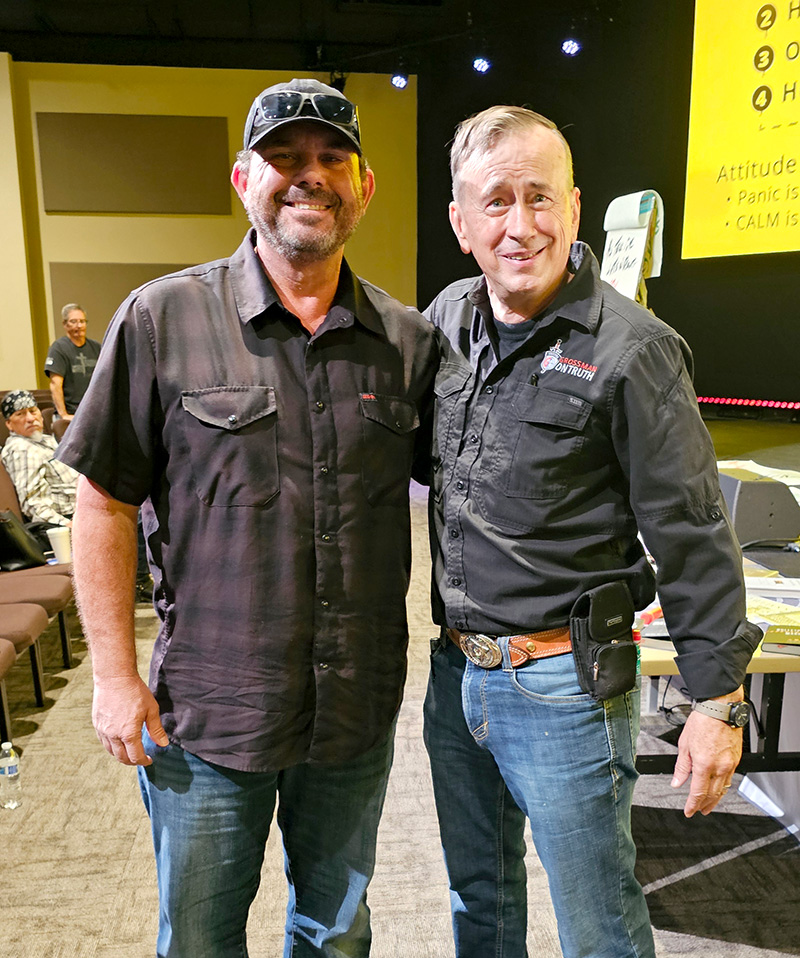
Most people move through the world without ever thinking seriously about violence. Not because they are naive or foolish, but because nothing in their daily experience has forced them to. They go to work, raise their families, and trust, reasonably, that the structures around them will keep them safe. Grossman calls these people sheep. He does not mean it as an insult. Sheep are not weak. They are simply not built for violence, and they do not spend their lives thinking about it.
Then there are wolves.
Wolves are the predators. They look at the sheep and see opportunity. They may be criminals, violent offenders, or simply people who have decided that what belongs to others is theirs to take, by force if necessary. The wolf does not announce himself. He waits for vulnerability, for distraction, for the moment when no one is watching. Most people will go their entire lives without encountering one directly. But they exist, and they always have.
And then there is the sheepdog.
The sheepdog lives among the sheep. He looks like them in many ways, he holds a job, has a family, shops at the same grocery stores and sits in the same traffic. But something in him is different. He has looked honestly at the world and accepted a truth that most people would rather not think about: evil exists, it can arrive without warning, and someone has to be willing to stand between it and the innocent. He has chosen, deliberately, soberly, to be that someone.
The sheepdog is not a tamed wolf. That distinction matters more than almost anything else in this framework, and it is the part most often misunderstood. The wolf and the sheepdog may share certain traits on the surface, both are capable of violence, both may be physically strong and tactically minded. But their character, their purpose, and their motivations could not be more different. The wolf acts out of predatory self-interest. The sheepdog acts out of love.
Grossman returns often to a principle that sits at the heart of the sheepdog identity:
Love always protects.Not ego. Not adrenaline. Not the thrill of carrying a weapon or the fantasy of being the hero in someone else’s emergency. The sheepdog is not hoping for a fight. He is hoping the fight never comes. He trains and prepares precisely because he wants the people around him to never need what he’s capable of. Picture a father standing in a grocery store checkout line, his daughter beside him, his mind quiet but never entirely off. He is not scanning the room because he enjoys it. He is present and prepared because the people he loves are standing next to him, and because the stranger ahead of him in line has a family too, and deserves to go home to them. That is the difference. The wolf sees the stranger as a target. The sheepdog sees him as someone worth protecting. This is also why the sheepdog can be uncomfortable to be around, even for the sheep he protects. His vigilance is a reminder that the world is not entirely safe, and most people would rather not be reminded of that. The sheep may find him unnecessary, even unsettling. But when the wolf appears, the sheep are very glad the sheepdog is there. Carrying a firearm, or training in any discipline oriented toward protection, is not a badge of status. It is not a license to seek confrontation or feel powerful. It is the acceptance of a specific kind of responsibility: for one’s actions, one’s decisions, and the consequences that follow. The sheepdog who understands this treats that weight seriously. He does not draw attention to his capability. He carries it quietly, like something he has chosen and would choose again.
Capability matters. Character matters more.
You Will Not Rise to the Occasion
This is the sentence I wish every new gun owner, every concealed carry student, and every “I’ll figure it out if it happens” person would hear and actually absorb:You do not rise to the occasion. You sink to your level of training.Under extreme stress, your body does things you didn’t vote for. Tunnel vision. Auditory exclusion. Time distortion. Heart rate through the roof. Fine motor skills, the ones you need for trigger control, for medical aid, for any precise physical task, begin to degrade. These aren’t failures. They’re survival mechanisms running ancient programming in a modern crisis. They happen to everyone. What separates performance from paralysis in those moments is what you built before them. The repetitions. The classes. The scenarios were practiced until the response no longer required conscious thought. I lived this. At Route 91, my EMT training didn’t feel like memory retrieval. It felt like instinct. Because it was years old, laid down in my early 20s, but there when I needed it most.
Train not so you’ll feel ready, but so you’ll actually be ready.
Sleep Is Tactical
This one surprised the room. It will probably surprise you too. Grossman spent considerable time on sleep, not as a lifestyle wellness tip, but as a hard performance variable. Research shows prolonged sleep deprivation impairs decision-making comparably to alcohol intoxication, and contributes to depression, poor judgment, and degraded response under pressure. I have seen firsthand how the stress of a traumatic event can rob you of sleep for months, and how that loss quietly erodes everything you’ve built. On the evening of May 31st, Julie and I had dinner with our neighbors: a retired Huntington Beach PD officer, a retired Montebello Fire Paramedic, and an active Los Angeles City firefighter. Between the four of us, there was no shortage of experience with high-stress environments and the physical toll they take. When I mentioned Grossman’s seminar, the conversation turned naturally to sleep deprivation and its effects on judgment, reaction time, and everything that matters when it matters most. Some of what I shared they already knew. Some of it landed new. It’s one of those subjects that looks like self-care until you understand what it’s actually protecting.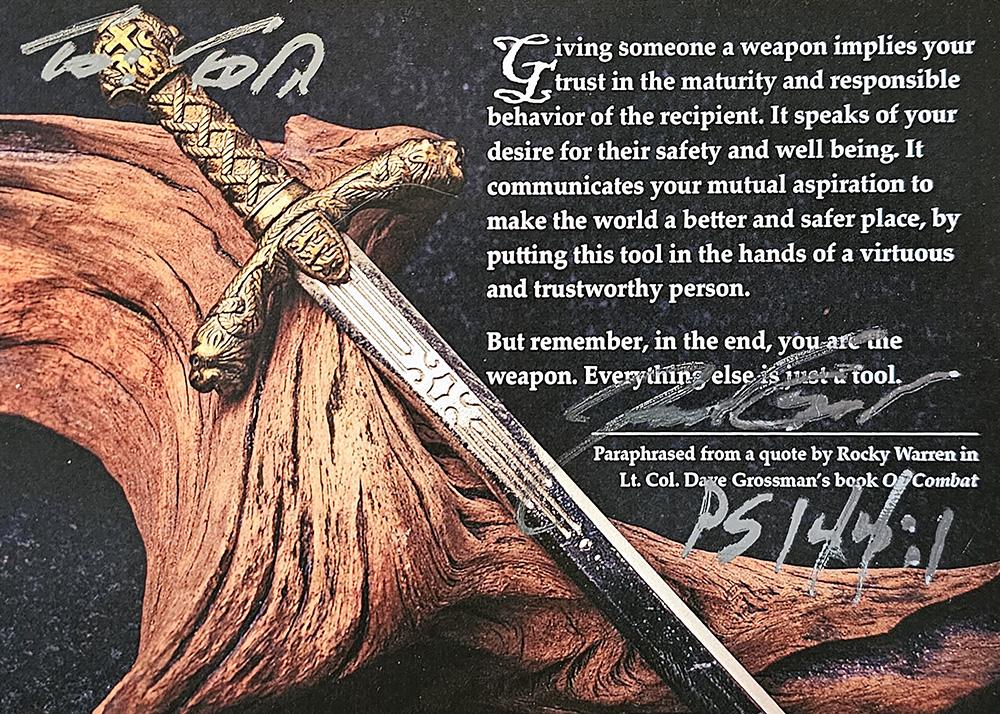
The Best Outcome Is Nothing Happens
Jeff Cooper’s Color Code system gets talked about often in defensive training circles. What gets talked about less is what Condition Yellow actually asks of you. Not hypervigilance. Not threat fixation. Just awareness. Notice the room. Notice behavior that’s out of place. Trust the instinct that something is off before you can articulate why. Create distance or leave before the situation requires anything else from you. The goal of every protective skill, situational awareness, concealed carry, medical training, is to never need it in anger. The win is the quiet evening that stayed quiet because you recognized something early enough to walk away. The most successful defensive encounter is often the one that ends with a calm conversation, an apology, a retreat, or simply leaving.Avoidance is not cowardice. It’s the highest expression of tactical intelligence.
A Gun Solves One Problem. Medical Training Solves Many.
At Not Today Self-Defense & Firearms Training, we teach American Red Cross First Aid, CPR, AED, and Stop the Bleed, and I’ll tell you plainly why. A firearm is a last resort for a specific category of emergency. Medical skills apply to car accidents, cardiac events, workplace injuries, kitchen accidents, and yes, gunshot wounds. They apply every day of your life in situations that have nothing to do with violence.“Carry a tourniquet. Learn to use it. Learn CPR. The odds you’ll use that knowledge in your lifetime are substantially higher than the odds you’ll ever need to draw a firearm.” - Lt. Col. Dave Grossman Both matter. One gets far more attention than it deserves, relative to the other.
Surviving the Incident Is the Beginning, Not the End
Grossman doesn’t let the seminar end at the gunshot. He talks about what comes after and it’s one of the things that sets his teaching apart, because most instructors don’t. Physical survival. Mental survival. Legal survival. Spiritual survival. After a traumatic event, memory distortion is normal. People remember sequences out of order, drop details entirely, or find that their recollection of ten seconds of crisis takes an hour to reconstruct. This is not malfunction. This is neuroscience. Understanding it before it happens means it won’t become another trauma layered on top of the first one. Knowing the legal reality of a defensive encounter matters too. What you say, when you say it, and to whom all have consequences that extend far beyond the incident itself. Being prepared for that reality before a crisis means one less thing to navigate in the aftermath of one. PTSD is an injury, not a character flaw. Injuries heal with the right support, the right professional help, community, and time. And beyond healing, post-traumatic growth is real. Adversity doesn’t have to be a ceiling. For many people, it becomes the foundation for something stronger.Route 91 didn’t end my story. It redirected it.
Here Am I. Send Me.
After the seminar, I asked Lt. Col. Grossman to sign one of the presentation tear sheets. Above his signature, he wrote a line from Isaiah 6:8: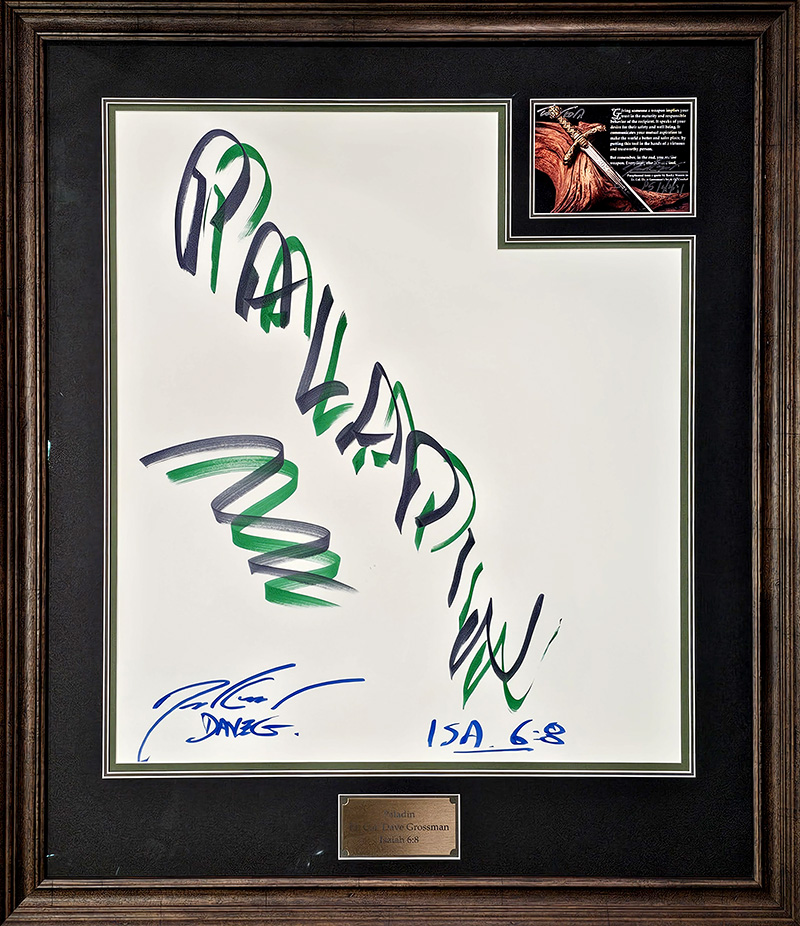
“Whom shall I send? And who will go for us?”The answer in the verse: “Here am I. Send me.” He also wrote one word: Paladin. A paladin is a protector whose strength is governed by character, discipline, restraint, and a commitment to serve others. The sheepdog isn’t someone who was born special, trained by the military, or issued equipment by the government. The sheepdog is anyone who looked at the world honestly and said: someone needs to be ready for this, and it might as well be me.
Capability without character is just danger with good aim.The whole point, the only point, is to develop the judgment, the restraint, the discipline, and the love that makes capability worth having. At Not Today, our purpose is simple: to develop responsible citizens prepared to protect life, serve their families, and strengthen their communities. We don’t just teach firearms. We develop people who can be trusted with them. Preparedness is not equipment. It is a mindset, a way of living, and a commitment to responsibility. The responsibility is yours if you want it.
Here am I.
About the Author Tom Durell is a Route 91 Harvest Festival survivor, EMT, and founder of Not Today Self-Defense & Firearms Training — a training organization built on the belief that responsible citizens are the foundation of safe communities. Learn more at nottodaydefense.com.