From Creedmoor to Missouri: Carrying the NRA Tradition Forward
By Tom Durell, NRA Training Counselor, Not Today Self-Defense & Firearms Training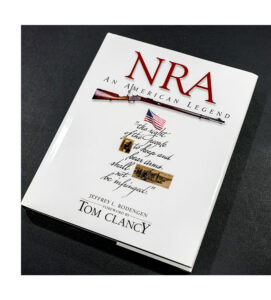
For as long as I can remember, the NRA has been part of my life. When I was a young boy, my grandfather in Florida would mail me NRA patches, stickers, knives, hats, and other NRA swag.
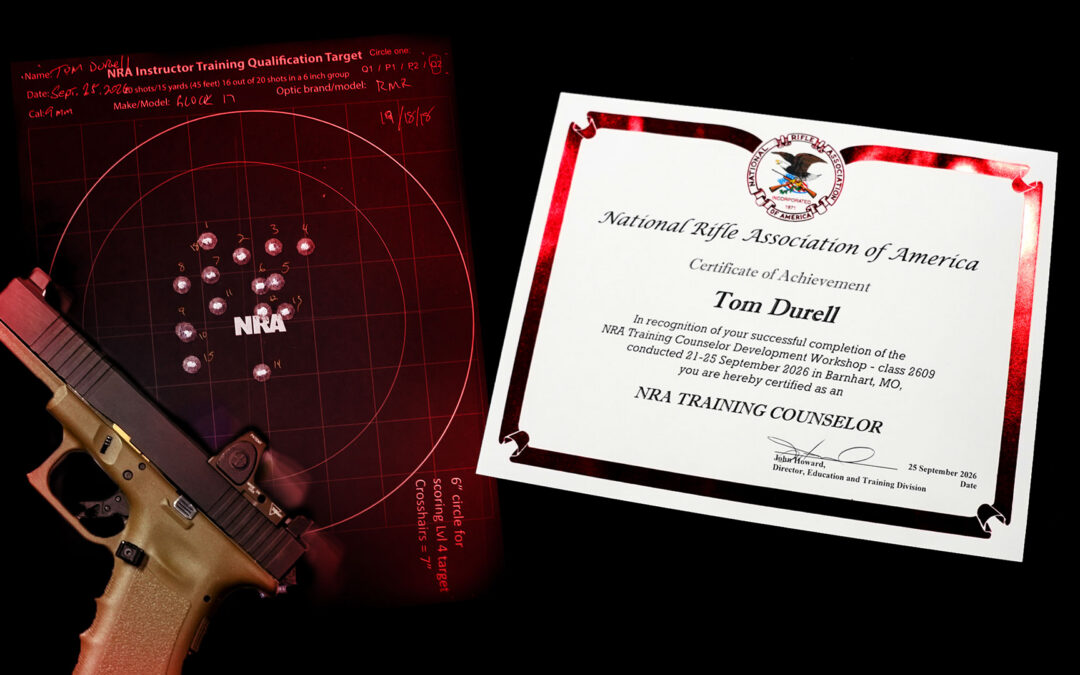
Today, a first-edition copy of NRA: An American Legend by Jeffrey Rodengen, with a foreword by Tom Clancy, sits on the shelf in my office. A few NRA metal signs hang on the walls. Soon they’ll be joined by my newly earned NRA Training Counselor Certificate, which I’m having framed with a challenge coin and a Counselor patch from the NRA Instructors Store.
Where It All Started
The NRA’s story begins in the years after the Civil War, with soldiers and militiamen. William C. Church, a journalist and former Union officer, edited the Army and Navy Journal, which covered both the regular army and the volunteer forces. George W. Wingate was a captain in New York’s militia, then known as the National Guard. Both were troubled by how poorly many soldiers had shot during the war. On November 17, 1871, they founded the National Rifle Association in New York to “promote and encourage rifle shooting on a scientific basis,” and many of its earliest members were citizen volunteers from the militia companies of the Northeast. Former Union general and Rhode Island governor Ambrose Burnside became its first president. With funding from the New York Legislature, the young association established a range on Long Island farmland known as Creed’s Moor, and in 1873 Creedmoor Range hosted the NRA’s first rifle matches, soon drawing international competition as well. Long-range shooters still carry that name today every time they chamber a 6.5 Creedmoor. I currently shoot a Christensen Arms 6.5 Creedmoor in the Desert Brown Cerakote finish, it’s my favorite rifle.
Training has been at the heart of the organization ever since. Over the decades, the NRA built marksmanship programs for civilians and youth, launched the country’s first hunter education program with New York State in 1949, and began training law enforcement firearms instructors in 1960. Today, NRA-certified instructors teach basic pistol, rifle, shotgun, and personal protection courses across the country, and Training Counselors are the ones who train and certify those instructors. This November, the NRA turns 155. America turned 250 this year.
Getting In
It wasn’t until I became an NRA Instructor that I got a look behind the curtain. I began to understand how much depth, resources, and training material instructors have access to.
One night, while ordering materials and uploading completed classes, I noticed a notification on my instructor dashboard: I am now qualified to attend an NRA Training Counselor Development Workshop. The sessions in Fairfax, Virginia, were all booked, but a class the following year in Missouri still had a few open seats.
On December 26, 2025, I emailed the NRA Education & Training Division in Fairfax to request a spot in that class, which was being organized in Barnhart, Missouri. On December 30, I heard back from Martin “Marty” Sprick, NRA Training Department Manager: I was in. The workshop was nine months away.
Five Days in Missouri
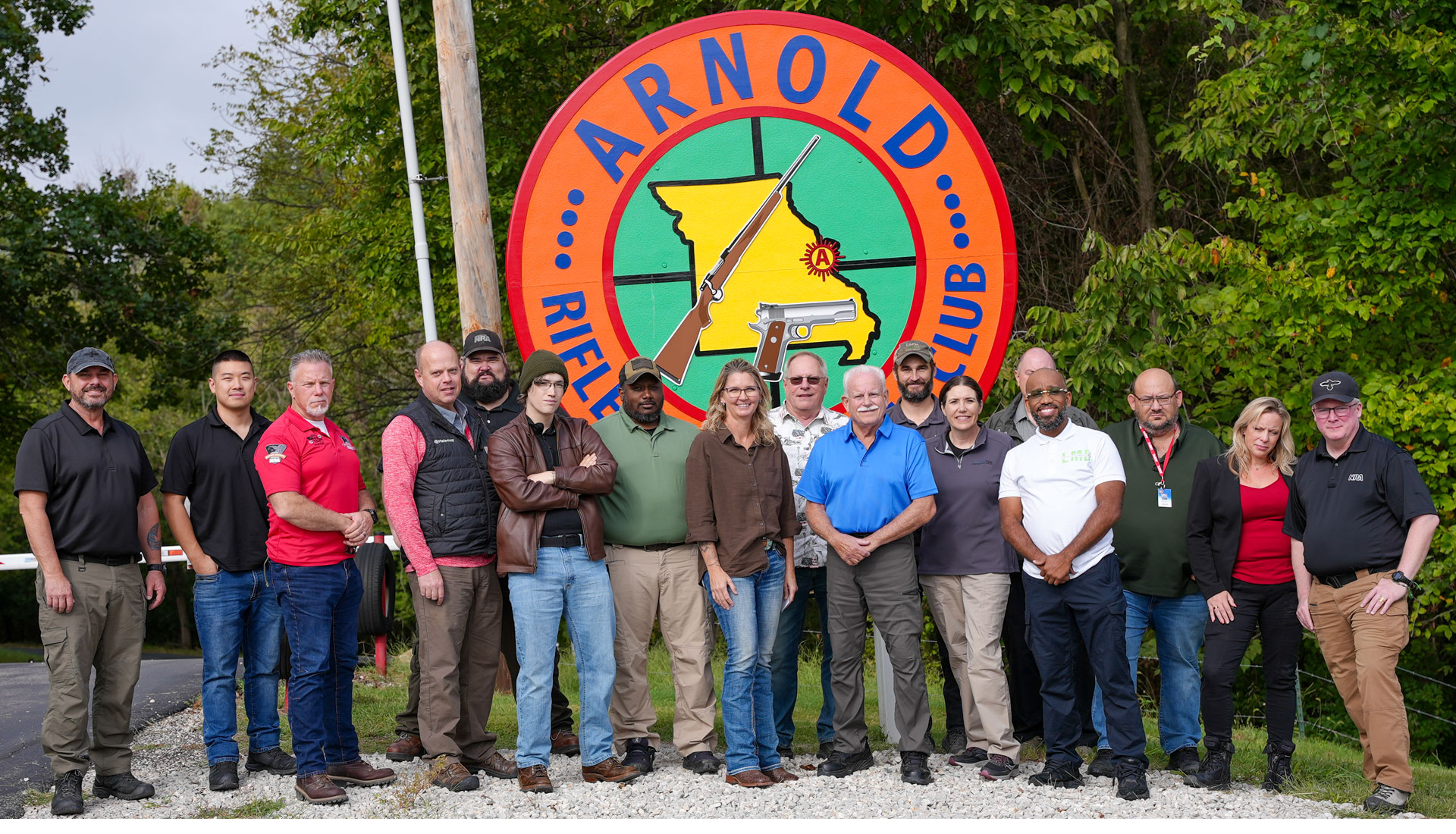
From September 21 through 25, 2026, I attended the workshop at Arnold Rifle & Pistol Club in Barnhart. Our class worked through classroom instruction, teaching assignments, range exercises, shooting qualifications, written exams, and evaluations.
Missouri has its own place in shooting history. In May 1976, Jeff Cooper presided over a gathering of practical shooters in Columbia, Missouri, where the International Practical Shooting Confederation (IPSC) was founded, giving practical pistol shooting its first international governing body. Fifty years later, I was in the same state, working to earn my own place in the instructor tradition.
I arrived as an experienced firearms instructor committed to improvement. I left with the NRA Training Counselor rating and a deeper understanding of the responsibility that comes with developing other instructors.
That distinction matters. Teaching someone to handle a firearm safely requires knowledge, patience, and sound judgment. Teaching an instructor to teach that person adds another level of responsibility, because the lessons you pass along can reach students you will never meet.
The workshop made me think carefully about that reach.
Standards You Have to Meet
This isn’t the kind of class where you pay, show up, and walk away with a certificate. There are standards, and you either meet them or you don’t.
 My acceptance email outlined what to expect and what to pack, along with a link to a folder with maps, requirements, and expectations. The line that stood out most was about the NRA Level 4 shooting test. According to the Candidate Workshop Letter, “Lack of fundamental marksmanship proficiency is the primary reason for not being recommended for Training Counselor appointment, and accounts for up to a 65% failure rate.”
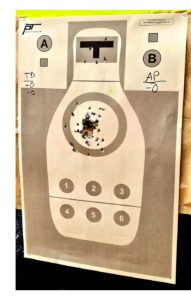
The test itself is straightforward: from 45 feet, fire 20 rounds and keep at least 16 inside a 6-inch circle. If you can’t do that, postpone the class and get some practice in.
To prepare, I chose my most trusted pistols for the course: a Glock 17 with an RMR, and took two backup pistols, a Glock 19 with an Aimpoint ACRO P2, and a Shadow Systems MR920 with an RMR. I zeroed my optics at 45 feet and put at least 2,000 rounds downrange to prepare for the Level 4 test. We all know the saying, “One is none, two is one, and three is better.” When you’re spending hard-earned money on the class, hotel, rental car, food, and travel, go prepared.
That preparation paid off. I shot the Level 4 qualification twice and put all 20 rounds inside the circle both times: 19 out of 20, and 18 out of 20. Marty scores every target the same way, laying a transparency overlay with a 6-inch circle over your group, so there’s no guessing about where your hits landed.
The Level 4 test is just the baseline. Safe gun handling, magazine changes, and several other drills are run throughout the week. You’re being observed for your ability while also picking up drills you can use with your own students and teach to instructor candidates.
As a shooter, instructor, and student, I love range time. If I had to pick the part of the workshop I enjoyed most, that would be it. We ran some great drills, including the FBI Pistol Qualification.
Back in the Student’s Seat
There were moments during the week when I felt challenged and uncertain. After the first day, I wondered how the rest of the workshop would unfold. I was used to standing in front of students and directing a class; in Missouri, I was back in the student’s seat, preparing assignments and having my own performance evaluated.
I kept a strict routine. After class, I’d head to the Texas Roadhouse next to my hotel and order the same thing every night: steak kabobs with vegetables and rice. Half was dinner, and the other half was the next day’s lunch.
After dinner, I went back to the room to review the day, organize my notes, and study. I tracked my written test scores to make sure I was keeping pace and prepared for the next day. On the final day, I put together a “Finish Strong” study guide, printed it at the hotel, and carried it with me to review before the exit interview. When it was over, I walked out of that interview with the Training Counselor rating.
I didn’t treat the workshop as a given. It was something I had to earn, and a step toward taking my business to the next level.
Being evaluated makes you examine habits that can become comfortable over time. You start noticing where an explanation needs more clarity, where a demonstration could improve, and whether your questions reveal what a student understands.
I’ve always approached every class with an open mind: if I take away even one thing, it was worth it. This workshop gave me five days of useful material I can pass on to the next generation of instructors and their students.
Instructor-Level Questions
Knowing the answer is only the beginning. An instructor must help someone else understand it and apply it.
During my first presentation, many of the questions I asked the class were student-level questions. I was reminded more than once that I needed to ask instructor-level questions, such as: “Explain how you would pass this knowledge and skill on to a student.”
That became my biggest takeaway from the workshop.
A presentation can contain accurate information and still leave a student confused. A demonstration can look impressive and still fail to show the steps a beginner needs to see. An instructor can speak confidently without giving students enough opportunity to participate.
Throughout the week, we worked on making instruction purposeful. What should the student learn? Why does it matter? How will the student demonstrate understanding? Those questions should shape the lesson, the practice, and the evaluation.
Knowledge, Skills, and Attitude
The NRA’s emphasis on knowledge, skills, and attitude took on new meaning in that setting. Students need accurate information, the ability to perform safely, and an attitude that supports continued learning and responsible decisions. Instructors need to develop those same qualities in themselves.
The range reinforced the classroom. Shooting qualifications required us to demonstrate our own proficiency, while coaching exercises required us to pay attention to someone else’s performance. That takes observation, clear language, and the ability to identify a useful correction.
Sometimes the best coaching means helping a student improve one thing at a time. Too many corrections at once can overwhelm someone who is already working hard. A well-chosen explanation, followed by another chance to practice, accomplishes much more.
We also spent time on counseling and feedback. An instructor candidate deserves an honest evaluation, delivered professionally and with respect. Useful feedback identifies what went well, explains what needs improvement, and offers a practical way forward.
That requires leadership. It also requires humility. The person giving the evaluation must remain willing to examine the quality of their own instruction.
One slide shared in class put it this way:
People may forget what you DID. They may forget what you SAID. But they will NEVER forget how you made them FEEL.
That’s worth remembering every time someone trusts you with their time and money.
The People Behind the Workshop
Marty Sprick, Manager of the NRA Training Department, served 22 years in the United States Marine Corps. He started as a recruit and small arms repairman and went on to serve as an Armory Chief, overseeing weapons maintenance and accountability. For more than 17 years, he also trained and coached junior Marines in competitive marksmanship, supervising match participation and coordinating team logistics.
Ed Zhou, Special Project Manager in the NRA Education & Training Division, is also an NRA Training Counselor. He previously worked as a Training Program Coordinator and Marketing Representative. He holds a Bachelor of Science in Business Management from Virginia Tech, with a focus on management consulting and analytics, and served as Public Affairs Officer for the Corps of Cadets Marksmanship Unit while there. His background spans firearms education, marketing, consulting, and nonprofit management.
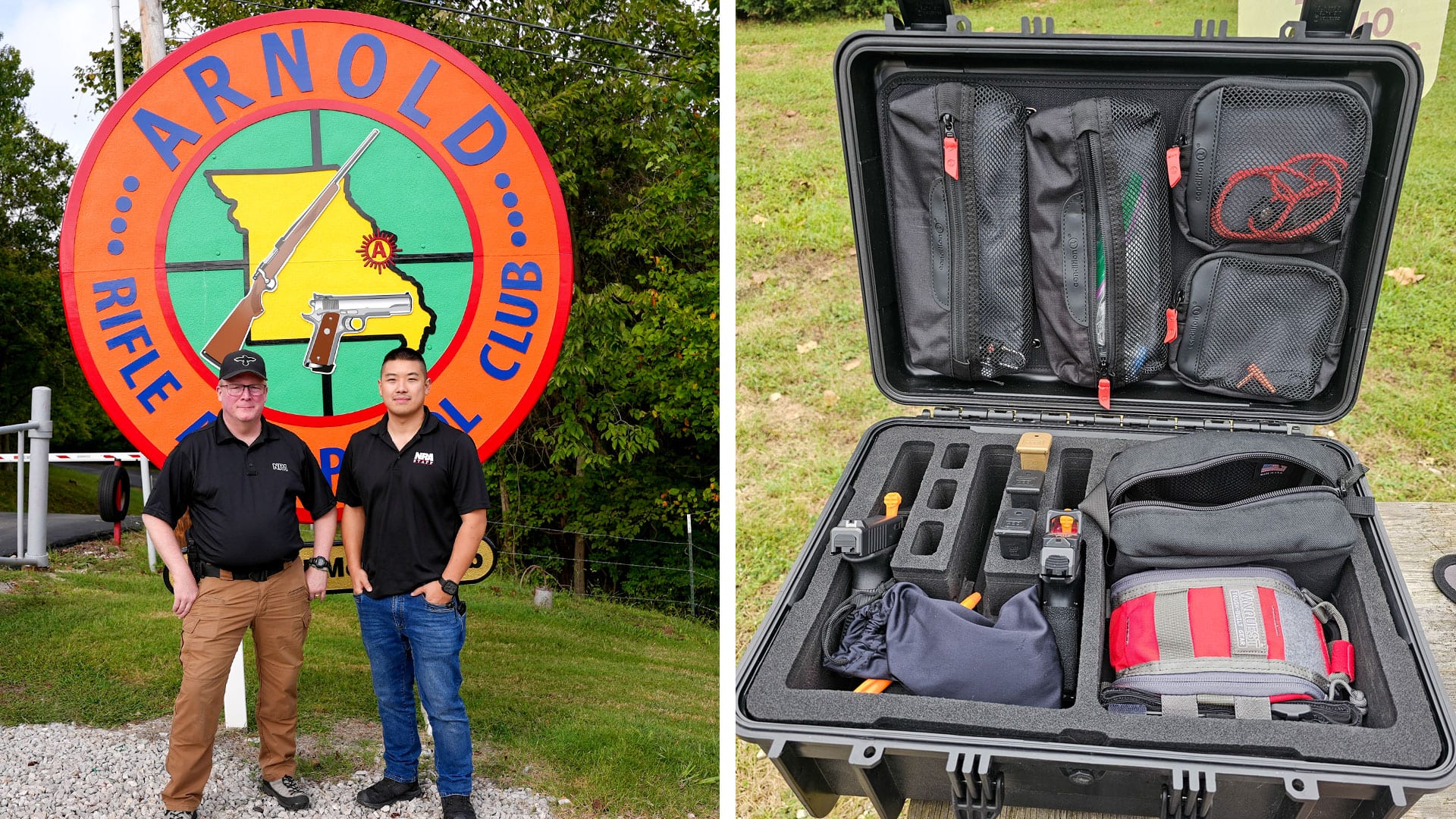
Beyond Marty and Ed, a team of NRA Training Counselors traveled from across the country to help with our instruction. They came to sharpen their own assessment and coaching skills, and they were a tremendous help to us candidates, always encouraging and always coaching. I appreciated the effort Marty, Ed, and the entire team put into the workshop and the seriousness with which they approach instructor development. The week demanded preparation, participation, and attention, and it gave me plenty to bring home and apply.
What the Rating Means
As an NRA Training Counselor, I can now train and certify new NRA Instructors in the same disciplines I’m certified to teach: Pistol, Rifle, Shotgun, Home Firearm Safety, Personal Protection in the Home, Personal Protection Outside the Home, NRA CCW, Metallic Cartridge Reloading, and Refuse To Be A Victim.
Instructor candidates complete NRA Basic Instructor Training along with the instructor course for each discipline they want to teach, both led by a Training Counselor. They’re evaluated on their gun handling and shooting, and just as importantly, on their ability to teach.
It’s a role I don’t take lightly. The instructors I certify will go on to teach students I may never meet, which is exactly the reach the workshop taught me to think about.
Earning a Place in the Tradition
There’s something meaningful about earning a rating from an organization with the NRA’s history. Its long tradition of firearms education is part of why I wanted to attend. Representing that tradition carries an obligation: teach carefully, maintain standards, and help the next generation of instructors succeed.
For me, the Second Amendment and responsible firearms education belong in the same conversation. I believe strongly in our right to keep and bear arms, and I take seriously the work of helping people exercise that right with knowledge and sound judgment.
Earning the Training Counselor rating brought pride, but it also brought a clearer sense of accountability.
At Not Today Self-Defense & Firearms Training, this experience will show up in the work: clearer lessons, better demonstrations, more thoughtful coaching, and stronger instructor development. My goal is to help future instructors become capable teachers who can serve their own students well.
I came home from Missouri with a new credential, a notebook full of lessons, and renewed motivation to keep improving.
Certification marks an achievement. What we do with it gives that achievement meaning.
Train. Prepare. Protect.
Tom Durell is an NRA Training Counselor, a California DOJ Certified Instructor, California P.O.S.T. Certified instructor, and a certified instructor with the NRA and USCCA. He runs Not Today Self-Defense & Firearms Training, based in Mission Viejo, California.